

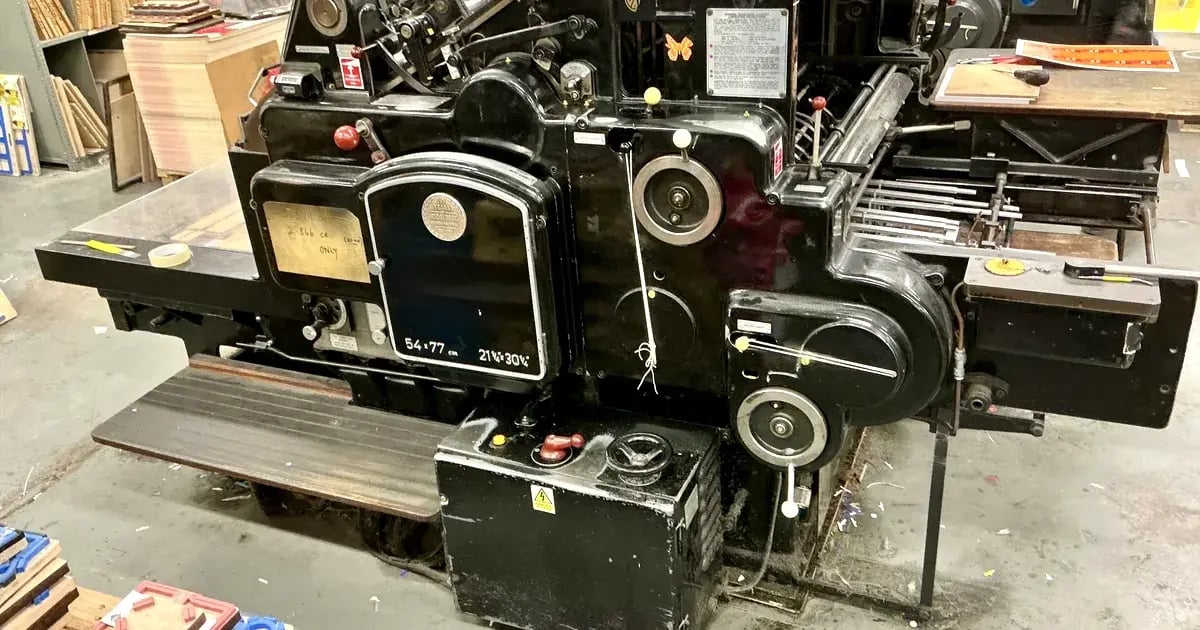
Short answer. PUWER stands for the Provision and Use of Work Equipment Regulations 1998. It applies to every employer and self-employed person who provides equipment for use at work, from a hand drill to a production line, and it requires that equipment is suitable for the job, maintained in a safe condition, inspected where that matters, used only by people with the right information and training, and fitted with the guards, controls and isolation the risk calls for.
Working out whether your equipment meets all of that is a PUWER assessment, which York Green carries out on site.
What does PUWER stand for?
Provision and Use of Work Equipment Regulations 1998. It is usually said as a word, "poo-er", and it replaced the 1992 regulations of the same name. It is made under the Health and Safety at Work etc. Act 1974 and is supported by an Approved Code of Practice and guidance, L22.
What counts as work equipment under PUWER?
Any machinery, appliance, apparatus, tool or installation for use at work. That includes hand tools, power tools, ladders, machinery of every size, vehicles used at work (where the road traffic rules do not already apply), lifting equipment, pressure systems and the installations that connect them. If someone uses it to do their job, PUWER applies to it.
Who does PUWER apply to?
Employers, the self-employed, and anyone who has control of work equipment or of the way it is used, including people who supply equipment for others to use at work. Regulation 3 is wide on purpose. A landlord who provides a passenger lift, a hire company supplying a dumper, and a contractor bringing a saw onto a site are all covered.
What does PUWER require?
The regulations are in two groups. Regulations 4 to 10 apply to all equipment: it must be suitable for the purpose and the conditions, maintained in an efficient state and working order, inspected where its safety depends on installation or where it deteriorates, restricted to trained people where the risk calls for it, and the people using it must have adequate information, instruction and training. Equipment must also conform to the relevant supply legislation (the CE or UKCA marking requirements).
Regulations 11 to 24 cover specific hazards: dangerous parts of machinery must be guarded or otherwise protected, there must be measures against specified hazards such as ejected material and fire, controls must be clearly visible and identifiable with start, stop and emergency stop functions, there must be a means of isolating equipment from its energy source, equipment must be stable and lit, and markings and warnings must be present.
What is the difference between PUWER and LOLER?
LOLER, the Lifting Operations and Lifting Equipment Regulations 1998, applies to lifting equipment and lifting operations on top of PUWER, not instead of it. A forklift, a crane or a hoist has to meet PUWER for guarding, controls and maintenance, and LOLER for thorough examination, marking of safe working load and planning of lifts. The two were made on the same day and are written to be used together.
Does CE or UKCA marking mean the equipment complies with PUWER?
No. Marking means the equipment met the supply requirements when it was placed on the market. PUWER is about how it is used on your site: whether the guarding is still in place, whether the controls still work, whether the people using it have been trained, and whether it is suitable for the job it is actually doing. A new machine with a bypassed interlock fails PUWER on the first day.
What is a PUWER assessment?
A systematic check of each piece of equipment against the regulations, on site, in normal use: suitability, condition, guarding, controls, isolation, maintenance arrangements, inspection records and training. The output is a schedule of equipment with a finding against each item and an action plan with priorities. What York Green's assessment covers, and the published price range, are on the PUWER assessment service page.
What happens if equipment fails a PUWER assessment?
A finding on guarding or isolation usually means the equipment comes out of service until it is put right. Most findings are less dramatic: a missing inspection record, a worn control label, a guard that has been removed for cleaning and not refitted. The action plan ranks them so the dangerous ones are dealt with first.
How often should a PUWER assessment be reviewed?
PUWER sets no fixed interval. Review when equipment is modified, moved or used differently, after an accident or near miss, when the people using it change, or when new information about its hazards comes to light. Beyond those triggers, set an interval that matches the risk; annual is common for manufacturing and workshop environments.