

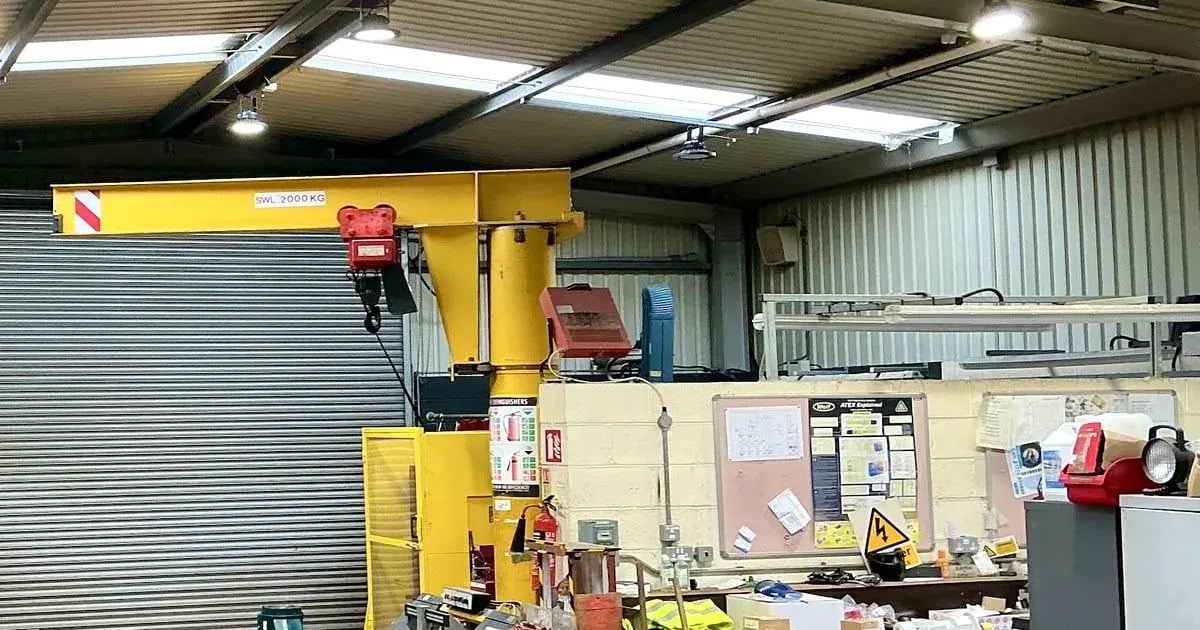
Short answer. PUWER (the Provision and Use of Work Equipment Regulations 1998) is the general regulation covering all work equipment. LOLER (the Lifting Operations and Lifting Equipment Regulations 1998) is a more specific regulation for lifting equipment and lifting operations. Where equipment is used for lifting, both apply at once, and LOLER adds a thorough examination requirement, at six months for equipment used to lift people and for lifting accessories, twelve months for other lifting equipment, unless an examination scheme sets a different interval.
PUWER: the broad framework
PUWER covers all work equipment, machines, tools and devices used at work, in general terms. It requires that work equipment is suitable for the purpose, maintained in safe condition, inspected and tested as necessary, used only by trained people, and has hazards guarded against.
PUWER applies to machinery such as saws, lathes, presses and grinders, to power tools, to lifting equipment such as chains, slings, hooks and pulleys, to access equipment such as ladders and scaffolding, to vehicles used at work, and to virtually any other equipment used in a work setting.
LOLER: the specialist framework for lifting
LOLER deals specifically with lifting equipment and lifting operations. It applies to all work equipment used for lifting, cranes, hoists, lifts, forklifts, pallet trucks, hand-powered hoists and winches, and to lifting accessories such as slings, chains, shackles, hooks, eyebolts and spreader bars, plus the lifting operations themselves.
LOLER is more prescriptive than PUWER. It requires that lifting equipment is designed, constructed and maintained to withstand the stresses of lifting, that certain equipment undergoes thorough examination by a competent person, that lifting operations are properly planned and supervised, that equipment is marked with its safe working load, and that accessories are marked and traceable.
The key difference: specificity
PUWER's requirement, in short, is that work equipment must be safe and maintained in safe condition. LOLER's requirement goes further for lifting equipment specifically: it must be designed for lifting, thoroughly examined, marked with safe working load, and used within a planned lifting operation. LOLER exists because lifting is high risk: equipment failure during a lift can cause serious injury or death.
Where they overlap
Lifting equipment is subject to both regulations at the same time. A hoist falls under PUWER as work equipment, so it must be safe, maintained and used only by trained operators, and it falls under LOLER as lifting equipment, so it must also be designed for lifting, thoroughly examined, marked with its safe working load, and used in a planned operation. PUWER is the general requirement; LOLER is the specialist, more detailed one layered on top where lifting is involved.
Equipment that is PUWER only
Some equipment is work equipment but not lifting equipment, so only PUWER applies: woodworking machinery such as saws, planers and shapers, metalworking machinery such as lathes, mills and grinders, assembly equipment such as riveting or welding machines, power tools, and vehicles used at work that are not lifting devices. A forklift is lifting equipment and falls under LOLER; a delivery van used for work is PUWER only.
What both regulations require when you have lifting equipment
Under PUWER, lifting equipment needs planned maintenance and regular checks, trained users, guarded hazards, and competent operators. Under LOLER, it additionally needs suitable design and construction for lifting, thorough examination by a competent person at the intervals set out below, safe working load marking, traceable and marked accessories, and properly planned lifting operations with a competent supervisor.
Thorough examination: the LOLER-specific requirement
Thorough examination goes beyond PUWER's general maintenance and inspection duty. It is a detailed visual and physical inspection of the equipment, including testing where appropriate, checking condition and wear, and identifying defects, carried out by a competent person with the relevant engineering knowledge or training for that equipment type.
Under LOLER regulation 9, the intervals are:
- Six months for lifting equipment used to lift people, and for lifting accessories such as chains, slings and shackles.
- Twelve months for other lifting equipment.
- Or, in either case, in accordance with an examination scheme drawn up by a competent person, which can set a different interval based on the equipment and how it is used.
Thorough examination is also required before equipment is first used, after any modification or repair that affects safety, and after any event that might have damaged the equipment.
Where confusion commonly occurs
Forklifts. A forklift is lifting equipment under LOLER, so it needs thorough examination, safe working load marking and lifting operation planning, not just PUWER-level maintenance. Where it also carries people, additional requirements around operator training and load limits apply.
Lifting accessories. Chains, slings, straps and hooks must be marked with their safe working load, kept traceable, thoroughly examined before first use and at the six-month interval, and removed from service if damaged. These are often managed as generic equipment under general maintenance, missing LOLER's specific requirements.
Informal lifting. Using a rope, chain or scaffold pole not designed for lifting to move something is not LOLER-compliant. Equipment used for lifting has to be designed and rated for that purpose.
What you actually need to do
- Identify all lifting equipment: cranes, hoists, lifts, pallet trucks, forklifts and similar.
- Confirm equipment is properly designed for lifting, not improvised.
- Arrange thorough examination by a competent person at the correct interval, six or twelve months, or per an examination scheme.
- Mark equipment with safe working load and the date of its last thorough examination.
- Keep records of thorough examination, maintenance and any repairs.
- Train operators specifically on the equipment they use.
- Plan lifting operations, with a competent supervisor.
- Manage accessories: mark them, keep records, and remove damaged ones from service.
PUWER's general maintenance and safety requirements sit alongside all of this rather than instead of it.
The full text of the regulations is available from the Lifting Operations and Lifting Equipment Regulations 1998 on legislation.gov.uk, alongside the supporting guidance in L113. A PUWER and LOLER assessment identifies which regulations apply to your equipment and sets the correct examination and maintenance schedule for each item.