

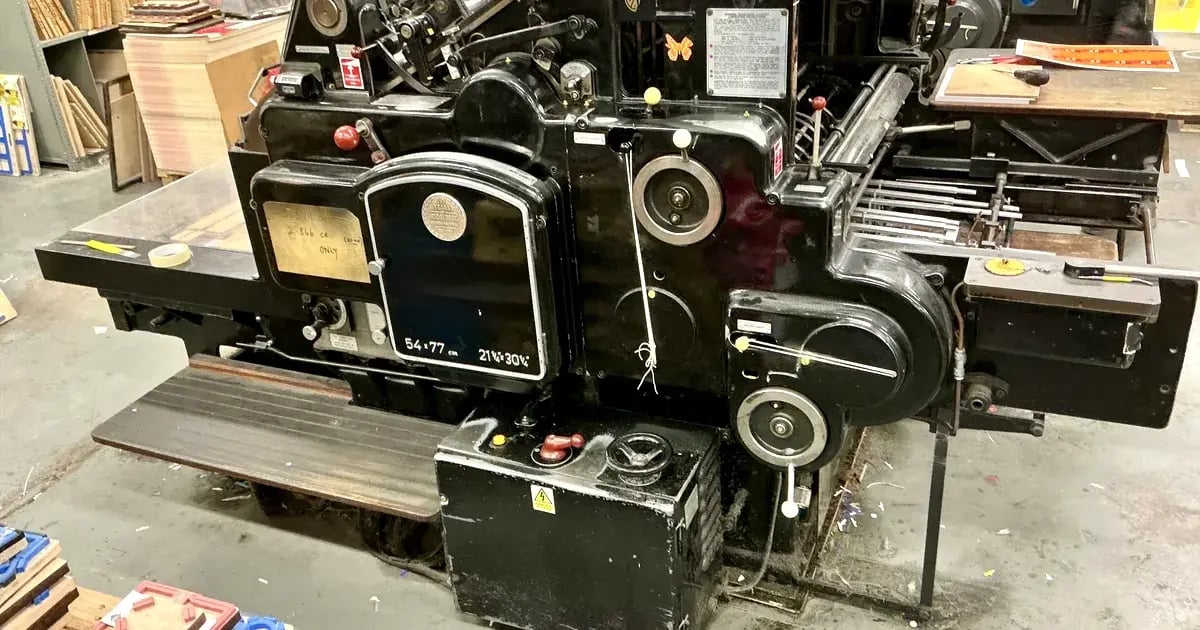
Short answer. Buying machinery second-hand does not reduce your legal duties under PUWER. The moment your employees start using it, you carry the same responsibility for its safety as if you had bought it new, whatever the seller told you and whatever condition it was sold in.
There is something satisfying about picking up a well-priced machine at auction that still works, looks decent, and does everything you need. The catch is what you inherit along with it.
The legal position is clear
The Provision and Use of Work Equipment Regulations 1998 (PUWER) apply to all work equipment, whether it is new, second-hand, hired, borrowed or rescued from a skip. The moment a piece of equipment enters your workplace and someone starts using it, PUWER places the same duties on you as if you had bought it new: it must be suitable for its intended use, maintained in a safe condition, properly guarded, fitted with appropriate controls, and your operators must be trained to use it.
"The seller told me it was fine" is not a defence. "It passed its last inspection" is not a defence. PUWER puts responsibility on the employer providing the equipment for use at work.
That does not mean the seller carries no responsibility at all. Under section 6 of the Health and Safety at Work etc. Act 1974, anyone who supplies an article for use at work, including second-hand dealers and auctioneers, has a duty to ensure it is safe when properly used. In practice this rarely gives you much recourse after the fact: it is a duty on the seller, not a substitute for your own PUWER duty as the employer using the machine.
What goes wrong with second-hand equipment
Second-hand machinery often comes with a history you do not know about. The most common problems:
Missing guards. Guards get removed during the machine's previous life, sometimes for maintenance, sometimes because a previous operator found them inconvenient, and never get put back. If you do not notice, or notice and assume it is fine, you are now operating an unguarded machine.
Modified controls. Previous owners may have bypassed safety interlocks, added non-standard switches or disabled emergency stops. These modifications are not always obvious without a proper inspection.
Worn components. Bearings, belts, hydraulic hoses, electrical insulation and brake mechanisms all degrade with use. A machine that looks fine externally can have components close to failure internally.
No documentation. The manufacturer's manual, maintenance history, previous inspection reports and risk assessments often do not travel with the machine. Without them, you have no reference point for maintenance and no manufacturer's guidance on safe use.
No conformity marking. Machinery first supplied after 1995 should carry CE or UKCA marking and a Declaration of Conformity, evidence that it met the Supply of Machinery (Safety) Regulations 2008 when it was placed on the market. Older second-hand machinery does not need to be retrofitted to today's design standards; PUWER regulations 11 to 24 require it to be safe in use, not rebuilt to current harmonised standards, and HSE's own guidance (L22) is explicit on this point. What does matter is machinery imported from outside the UK or EU: bringing it in counts as a new supply, which means it needs a full conformity assessment and marking as if it were new.
What to do before using second-hand equipment
Before any second-hand machine goes into service, carry out a thorough pre-use assessment covering:
- Visual inspection for missing or damaged guards, exposed dangerous parts, damaged controls, wear, corrosion and unauthorised modifications.
- Functional testing of every control (start, stop, emergency stop, mode selectors), every safety interlock, and a full operating cycle to check for abnormal vibration, noise or behaviour.
- Documentation review: obtain whatever the seller has, and if the manufacturer's manual is missing, contact the manufacturer or source one from another user. Where nothing exists, you may need to write your own safe operating procedure.
- A specific risk assessment for the machine in its intended location, covering the tasks, the operators and the environment.
- A guarding assessment against PUWER's guarding hierarchy, with any missing guards sourced from the manufacturer or made by a competent engineer before the machine is used.
- Operator training on the specific machine, not an assumption that experience on something similar is enough. Different models from the same manufacturer can have different controls and different hazards.
Auctions and online marketplaces
Machinery auctions are risky because equipment is typically sold "as seen," with no warranty, no documentation and no chance of a detailed pre-purchase inspection. That does not remove your PUWER responsibilities. If you buy a machine at auction and it is missing guards, fitting guards before use is still your obligation. The same goes for online marketplaces: photos cannot show worn bearings, bypassed interlocks or modified controls. Budget for a proper pre-use inspection and any remedial work, since a saving on the purchase price can disappear quickly once that work is accounted for.
York Green's PUWER assessment service covers second-hand machinery before or immediately after purchase, so you know exactly what needs attention before it goes into production. HSE's own guidance on buying and using second-hand work equipment, including the position on conformity marking, is set out in HSE's second-hand machinery guidance.