

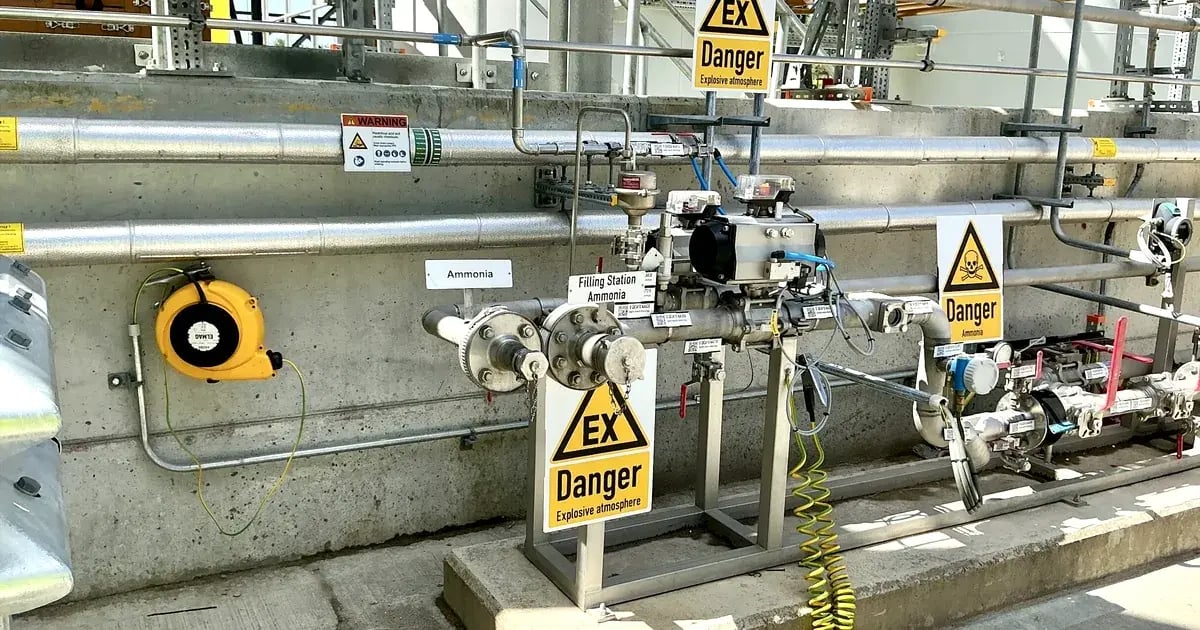
Short answer. DSEAR applies wherever a workplace stores or uses substances that can catch fire or form an explosive atmosphere, and that list is much wider than oil rigs and chemical plants. Hand sanitiser, aerosols, some cleaning products and fine dust all qualify, and the site needs to know what it has and where.
Spotting the hazard is the first step. Assessing it properly is the DSEAR assessment York Green carries out on site.
The obvious cases
Some workplaces clearly fall within the Dangerous Substances and Explosive Atmospheres Regulations 2002 (DSEAR) and generally know it. Any site that stores or uses petrol, diesel, LPG, acetylene, solvents, thinners, adhesives, paints, varnishes or industrial gases is squarely within scope. Vehicle workshops, manufacturing facilities, printing works, laboratories and construction sites usually recognise this. They are not the only ones DSEAR reaches.
The hazards that get missed
DSEAR covers any substance that could create a fire or an explosive atmosphere, which includes several everyday products that most employers would never think of as dangerous.
Hand sanitiser and alcohol gels. These typically contain 60 to 80% ethanol or isopropanol and are classified as flammable liquids. A dispenser on a desk is low risk on its own, but bulk stock kept in a warm storeroom is a DSEAR consideration.
Aerosol cans. Air fresheners, cleaning sprays, spray paint and similar products use flammable propellants. One can on a shelf is not a concern; a storeroom full of them near a heat source is.
Cleaning products. Floor strippers, degreasers and some solvent-based cleaners can be classified as flammable. The safety data sheet for each product will say so, and that classification determines how it should be stored and used.
Dust. This is the one that most often surprises people. Fine organic dust, including flour, sugar, wood dust, grain dust and some powdered foods, can form an explosive atmosphere when dispersed in air at the right concentration. The severity varies by dust type, but the principle is the same as for a flammable gas: get the right mix of fuel, oxygen and an ignition source and it will ignite. A stray spark igniting a cloud of coloured cornstarch powder at a water park event in New Taipei in 2015 killed 15 people, which shows the effect is not limited to industrial settings.
Battery charging areas. Lead-acid batteries, of the kind used in forklifts and backup power systems, give off hydrogen gas while charging. Hydrogen is highly flammable, so a charging area without adequate ventilation is a DSEAR risk.
Cooking oil itself is not a DSEAR substance: its flash point is far too high for it to be classified as a flammable liquid. Grease build-up in kitchen extraction ductwork is a genuine fire risk, but it is managed under the Fire Safety Order through regular cleaning and maintenance of the extraction system, not through a DSEAR assessment.
Why these get overlooked
The pattern is usually one of perception rather than ignorance. Employers associate DSEAR with heavy industry, so they do not think to apply it to an office, shop, care home, school or warehouse. The substances involved feel mundane: everyone uses hand sanitiser, every kitchen has cleaning products, most sites generate some dust. DSEAR does not care how familiar a substance feels. It cares about what it can do under the wrong conditions.
What to record about the substances on site
A DSEAR assessment needs an accurate picture of what is actually on the premises, not a guess. For each dangerous substance kept or used on site, record:
- What it is and its classification, taken from the safety data sheet.
- How much is normally kept on site, and where it is stored.
- The conditions it is stored or used under, such as temperature, ventilation and proximity to ignition sources.
- Who handles it and what training or precautions they have been given.
Keeping this list current, and reviewing it whenever a new product is brought into use, is what turns a DSEAR assessment from a one-off exercise into something that still reflects reality a year later.
Practical steps
Identifying that a hazard exists does not mean the workplace is on the verge of an incident. It means the risk needs assessing and managing. Start by checking the safety data sheet for every chemical product stored or used, and consider any dust-generating process, gas supply or battery charging area on site.
Where DSEAR applies, the assessment needs to evaluate how likely a dangerous concentration is to form, identify where that could happen, work out what ignition sources are present in those areas, and set out control measures to remove or reduce the risk. HSE's Approved Code of Practice L138 sets out how to carry this out. For most low-risk workplaces the controls are straightforward: correct storage, adequate ventilation, good housekeeping, appropriate signage and basic awareness training. A cleaning cupboard does not need to be treated like a petrochemical plant, but the risk still needs to be shown to have been considered.
If you are not sure whether DSEAR applies to your workplace, York Green's DSEAR risk assessment service can review what you store and use and confirm what, if anything, needs to change.