

Short answer. DSEAR zone classification categorises areas by how likely a flammable gas, vapour or dust atmosphere is to be present and for how long. Gas and vapour areas use Zones 0, 1 and 2; dust areas use Zones 20, 21 and 22. The zone dictates what equipment, if any, may be used there.
Why zones exist
An explosive atmosphere is a mixture of air with flammable gas, vapour, mist or dust that could ignite. Not every part of a workplace carries the same risk: the area directly around a fuel filling point is far more hazardous than a corridor twenty metres away.
Zone classification is the method used to categorise areas of a workplace by how likely an explosive atmosphere is to form and how long it might persist. It is set out in DSEAR Schedule 2 and classified in practice using BS EN 60079-10-1 (gas and vapour) and BS EN 60079-10-2 (dust). The zone then determines what equipment is acceptable, because controlling ignition sources in that area is the priority.
The zones, gas and dust side by side
| Gas/vapour zone | Dust zone | Definition |
|---|---|---|
| Zone 0 | Zone 20 | An explosive atmosphere is present continuously, or for long periods, or frequently. |
| Zone 1 | Zone 21 | An explosive atmosphere is likely to occur in normal operation occasionally. |
| Zone 2 | Zone 22 | An explosive atmosphere is not likely to occur in normal operation, but if it does, will persist only for a short period. |
Zone 0 and Zone 20 areas are usually inside enclosed equipment: tanks, vessels, pipework, dust extraction ductwork, hoppers and silos. Zone 1 and Zone 21 cover the space immediately around a dispensing point, an open tank, a flanged connection or a bag-filling point, where a flammable atmosphere can reasonably be expected during normal working. Zone 2 and Zone 22 are the wider areas where an explosive atmosphere would only form if something goes wrong, a spill, a leak, a ventilation failure.
What the zones mean for equipment
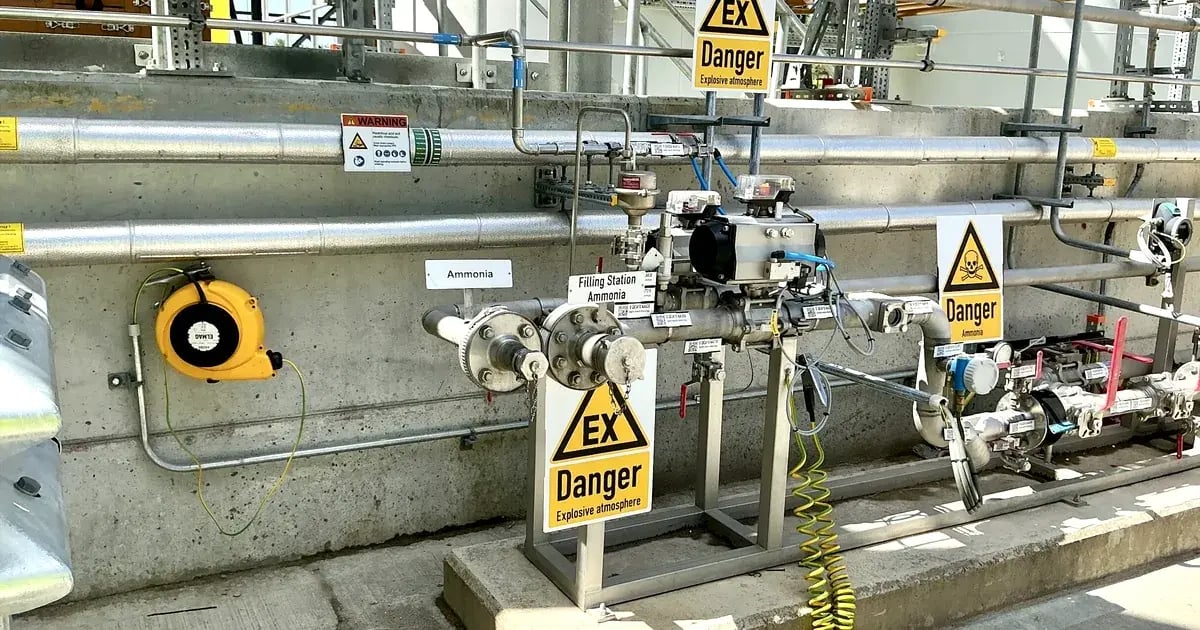
Any zoned area must be identified and marked with the "EX" warning sign under DSEAR regulation 7 and Schedule 4, so that anyone entering knows an explosive atmosphere risk is present. Equipment used inside a zone, electrical or mechanical, must be designed and certified for that zone. A standard motor, junction box or gearbox can become an ignition source just as easily as a light switch.
In Great Britain, this equipment is covered by the Equipment and Protective Systems Intended for Use in Potentially Explosive Atmospheres Regulations 2016 (the EPS Regulations), which require UKCA marking (CE marking is still accepted under current transitional arrangements). Equipment is grouped by the level of protection it gives: equipment for Zone 0 or Zone 20 needs the highest level of protection, Zone 1 or Zone 21 a high level, and Zone 2 or Zone 22 a normal level, sufficient because an explosive atmosphere is only expected to be present briefly.
A practical example
Take a vehicle workshop with a solvent cleaning tank. The inside of the tank is Zone 0: continuous flammable vapour. The area close to the tank opening, where vapour is expected during normal use, is Zone 1. Beyond that, an area where vapour would only be present briefly if something went wrong is Zone 2.
The actual extent of each zone is not a rule of thumb. It depends on the release rate, the ventilation in the room, and how the vapour behaves once released, and it is calculated as part of the DSEAR assessment rather than estimated by eye. A standard fluorescent light fitted directly above the tank would sit in Zone 1 and could ignite the vapour; a socket further out might be acceptable in Zone 2 if it is correctly rated, but that always needs checking against the assessment rather than assumed.
Common misconceptions
"We don't have zones, we don't use chemicals." Zone classification applies to any workplace with flammable substances, including natural gas, LPG, and dust from wood, flour, sugar, metals or plastics. If flammable substances are present, zones may well apply.
"Our ventilation means we don't need zones." Good ventilation can reduce the extent of a zone, or remove it in some cases, but this has to be demonstrated through assessment. Ventilation rate, reliability and what happens if it fails all need to be considered, not assumed.
"Zone classification is only for petrochemical sites." It applies just as much to bakeries, woodworking shops, paint spraying booths, breweries, laboratories and vehicle workshops.
The bottom line
Zone classification is not academic theory. It is a practical tool that determines what equipment can safely be used in different parts of a workplace. Getting it wrong leaves ignition sources in areas where an explosive atmosphere could form; getting it right lets a business operate safely and demonstrate compliance with DSEAR. York Green's DSEAR risk assessment service maps the zones on your site and checks the equipment in them against the correct rating.