

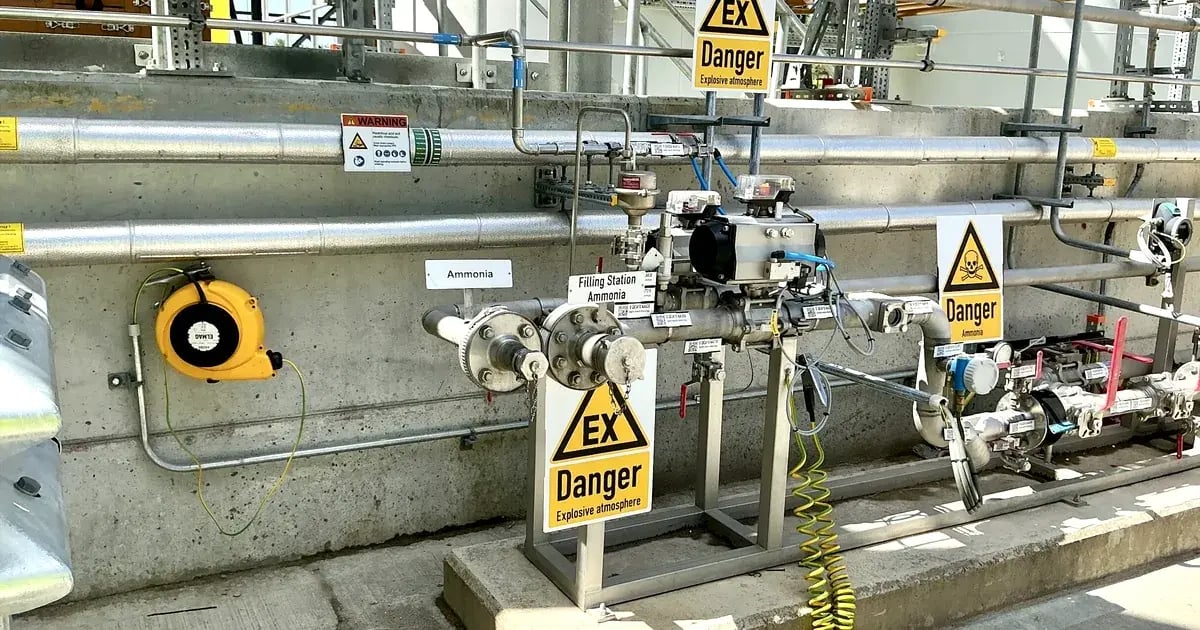
Short answer. DSEAR (the Dangerous Substances and Explosive Atmospheres Regulations 2002) applies to any workplace where dust, vapour, gas or mist could form an explosive atmosphere, not just fireworks factories and refineries. Bakeries, woodworking shops, spray booths, grain stores and printing facilities are all commonly in scope, and each needs a risk assessment, zone classification where relevant, and control of ignition sources.
What counts as an explosive atmosphere
An explosive atmosphere is a mixture of air and a flammable substance, in the form of gas, vapour, mist or dust, that explodes when ignited. Four things have to come together: a flammable substance, the right concentration of it in air, an ignition source such as a spark, hot surface, friction or static, and oxygen, which normal air already supplies.
You do not need explosions to have happened for DSEAR to apply. The regulations apply wherever there is a reasonable possibility that an explosive atmosphere could form during normal operation or foreseeable circumstances, including cleaning, maintenance and equipment failure.
Where explosive atmospheres commonly form
Bakeries and food production. Flour dust is flammable, and a flour dust explosion can be as violent as a fuel-air explosion. Bakeries with milling equipment, dough mixers or bulk flour storage carry explosive atmosphere risk, and many have never assessed it under DSEAR. The 2015 explosion at a wood flour mill in Bosley, Cheshire, which killed four people, is a reminder that this risk is not theoretical or confined to obvious heavy industry.
Woodworking and sawmills. Wood dust suspended in air creates an explosive atmosphere. A workshop with powered saws and sanders generates dust continuously, and an ignition source, an electrical fault or a spark from metal on metal, is often already present nearby.
Spray painting and coating. Automotive paint shops, industrial coating and furniture refinishing all create flammable vapour. This is obvious DSEAR territory, yet some smaller operations run without proper zoning or ventilation.
Petrol stations and fuel handling. Clearly in scope, but many operators underestimate how detailed the zoning and ignition control requirements are around dispensers and tanks.
Grain storage and handling. Grain dust is combustible, and farms with grain stores or handling equipment fall within DSEAR, often without any formal management of the risk.
Chemical handling and industrial cleaning. Mixing, storing or handling chemicals that give off flammable vapours brings a site into scope, including solvent-based cleaning and some laboratory work.
Printing facilities. Inks and solvents containing volatile organic compounds can create flammable vapours during printing and drying.
Boiler rooms and gas heating. Boilers and gas-fired heating systems can create an explosive atmosphere risk if there is a gas leak and it is allowed to accumulate in an enclosed space.
Quarrying and stone extraction are usually a different case: most rock and mineral dusts are not combustible, so DSEAR is less likely to be the relevant regulation there, and coal mining is covered separately under mines-specific legislation rather than DSEAR.
What DSEAR actually requires
Assess the risk
You need a risk assessment that identifies what dangerous substances are present, in what form and quantity, how often and for how long people are exposed, how likely an explosive atmosphere is to form, and what could ignite it. Under regulation 5(4), the significant findings must be recorded in writing where five or more people are employed; below that threshold it is still good practice to write it down, but it is not a fixed statutory requirement.
Classify zones where relevant
Where there is a reasonable possibility of an explosive atmosphere forming, the area is classified into a zone. For gas, vapour and mist:
- Zone 0: explosive atmosphere present continuously or for long periods.
- Zone 1: explosive atmosphere likely to occur occasionally during normal operation.
- Zone 2: explosive atmosphere not likely in normal operation, and if it does occur, only briefly.
Combustible dust uses a separate, parallel set of zones:
- Zone 20: a combustible dust cloud present continuously or for long periods.
- Zone 21: a combustible dust cloud likely occasionally during normal operation.
- Zone 22: a combustible dust cloud not likely in normal operation, and if it occurs, only briefly.
Bakeries, woodworking and grain handling are dust risks, so it is the 20/21/22 scheme that applies to them, not the gas zones.
Control ignition sources in classified areas
In classified zones you need to prevent or control hot surfaces, sparks and open flames, friction and impact, static electricity (earthing and, where needed, conductive flooring), electrical and mechanical ignition sources, and radiant heat from processes such as welding or cutting.
Provide suitable equipment
Equipment used in classified zones needs to be certified for that zone. Since Brexit, UK conformity is marked as UKCA or UKEX rather than the EU's ATEX marking, under the Equipment and Protective Systems Intended for Use in Potentially Explosive Atmospheres Regulations 2016 (EPS Regulations 2016), which implement the same technical standards as ATEX. Equipment already in use before July 2003 can continue to be used without re-certification provided the risk assessment shows it remains suitable.
Manage contractors and changes
Anyone working in a classified area, including contractors, needs to know the risks and the controls in place. The assessment needs to be reviewed whenever there is reason to believe it is no longer valid, or after a significant change to the process, substances or environment, rather than on a fixed annual cycle.
The compliance gap
The pattern we see repeatedly is businesses that should be under DSEAR and have never had a formal assessment: no documented zones, no control measures, no procedures. A bakery might assume flour dust "isn't really a risk" because nothing has gone wrong yet. A woodworking shop might run dust extraction and electrical equipment with no idea it needs to be rated for the zone it sits in. Neither absence of an incident nor years of trouble-free operation is evidence that the risk has been controlled.
Where to start
- Document what substances you use, what comes in, in what form, and in what quantities.
- Identify when explosive atmospheres could form, during normal work, cleaning, maintenance or foreseeable unusual situations.
- Get a DSEAR assessment carried out by someone competent to classify zones correctly.
- Classify zones formally where the assessment shows they are needed.
- Document control measures and update your health and safety arrangements to reflect them.
- Brief everyone working in classified areas on the risks and the rules.
- Review the assessment when it may no longer be valid, or after any significant change.
Explosive atmospheres are not limited to heavy industry, and DSEAR applies more broadly than most business owners assume. HSE's guidance on the regulations, including the Approved Code of Practice L138, is available on HSE's DSEAR pages. A DSEAR risk assessment identifies which of these duties apply to your site and what zone classification, if any, is needed.