

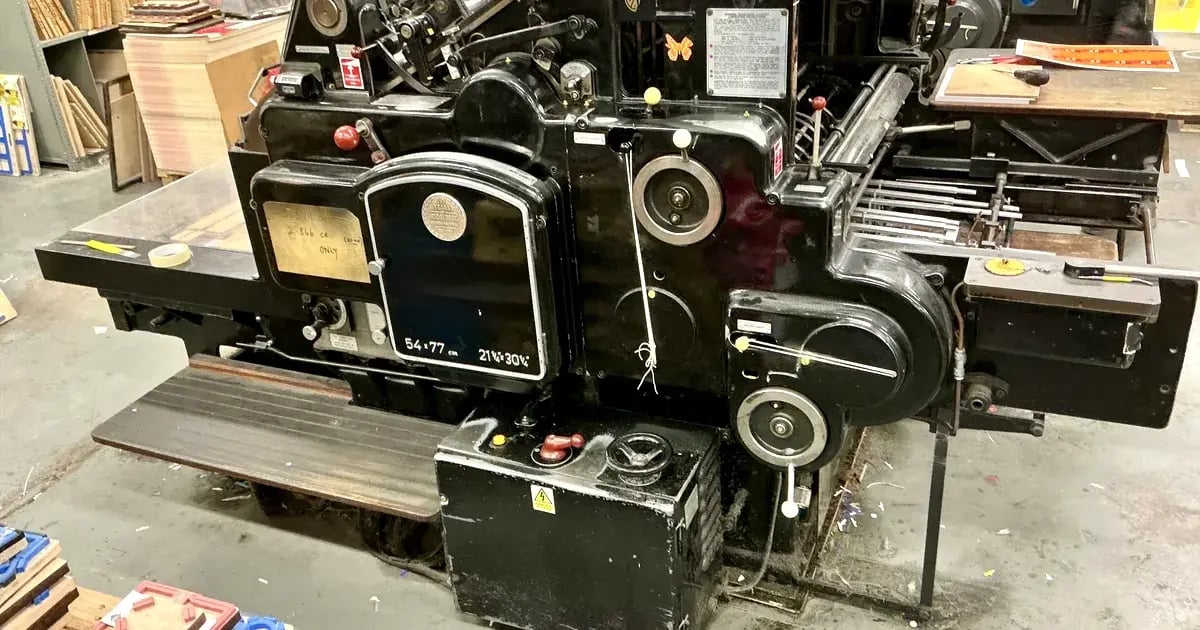
Short answer. The Provision and Use of Work Equipment Regulations 1998 (PUWER) require employers to make sure work equipment is suitable, well maintained and used safely, including guarding any dangerous parts. The duty to assess the risks in the first place actually sits in the Management of Health and Safety at Work Regulations 1999; a PUWER assessment is how that general duty gets applied to the equipment on your site.
If the answer turns out to be yes, the York Green PUWER assessment service explains what happens on site and what it costs.
If you employ people who use equipment to do their jobs, and that is virtually every employer in the country, PUWER applies to you. The regulations might read like something written by committee, because they were, but the principle behind them is straightforward: work equipment must be safe, and employers must keep it that way.
The tricky part is that "work equipment" does not just mean the big, obvious machinery. It means almost everything.
What counts as work equipment under PUWER?
This is where PUWER catches people out. Say "work equipment" and most people picture a lathe, a press brake or a forklift, and those certainly count. But the definition is considerably broader than that.
Work equipment includes any machinery, appliance, apparatus, tool or installation used at work. That covers CNC machines and hand drills, conveyor belts and office shredders, circular saws and the staff room microwave. If employees use it as part of their work, it is covered.
Second-hand equipment is covered. Hired equipment is covered. Equipment provided by someone else on a shared site is still your responsibility if your employees are using it. It does not matter whether the equipment was bought new from a dealer or picked up secondhand: once it is in your workplace and your employees are using it, PUWER applies.
What PUWER actually requires
PUWER places several duties on employers. These are legal requirements, not suggestions:
- Suitability. Equipment must be suitable for its intended purpose and the conditions in which it is used.
- Maintenance. Equipment must be maintained in an efficient state, in efficient working order and in good repair. Where a maintenance log is kept, it must be kept up to date.
- Inspection. Where the safety of equipment depends on the conditions in which it is installed or used, it must be inspected at suitable intervals and after any exceptional circumstances that could affect it.
- Information and instructions. Anyone using, supervising or managing work equipment needs adequate health and safety information and, where appropriate, written instructions.
- Training. Employees need adequate training in the methods of use, the risks involved and the precautions to take.
- Guarding. Dangerous parts of machinery must be guarded. Contact with moving machinery is a leading cause of fatal workplace injury, and missing or defeated guards are one of the most common breaches found on site.
- Controls. Equipment must have appropriate controls for starting, stopping and emergency stop functions.
The guarding hierarchy
PUWER regulation 11 sets out a clear order of preference for guarding dangerous parts of machinery, and it is worth getting right because HSE inspectors check it directly:
- Fixed guards, permanently attached and requiring tools to remove.
- Other guards or protection devices, such as interlocking guards that stop the machine when opened, or automatic devices that isolate the danger.
- Protection appliances, such as jigs, holders and push-sticks, that keep hands away from the danger while the work is done.
- Information, instruction, training and supervision, used only where physical guarding is not practicable.
The reality in many workshops is that guards get removed because they "slow things down" or "get in the way." Some machines arrive from the second-hand market with guards missing entirely. This is a serious breach: if a machine has a dangerous part exposed, it needs guarding, and the four tiers above are the order in which you work through the options, not a menu to pick from at will.
The common mistakes
Across assessments carried out in different industries, the same issues come up again and again:
- No risk assessments. The equipment is in daily use, but nobody has sat down and assessed the specific risks, whether for the equipment itself, the process, or the people using it.
- Missing or removed guards. Either the guards were never fitted, or they have been taken off for "convenience" and never put back.
- No training records. Employees use equipment they have never been formally trained on. They learned by watching a colleague, and there is no documentation.
- Maintenance by memory. Equipment gets maintained when someone remembers, or when it breaks down, with no planned schedule and no records.
- Hired equipment not assessed. A machine arrives on hire and people start using it straight away, with nobody checking whether it is suitable, whether guards are in place, or whether operators need training on that specific model.
What a PUWER assessment looks like
A PUWER risk assessment examines every piece of work equipment in your operation. The assessor identifies each item, checks its condition, confirms that guarding is in place and effective, reviews maintenance arrangements and records, and checks whether operators have received adequate training. York Green's PUWER risk assessment service produces a practical report that sets out what is compliant, what needs attention, and what needs urgent action, rather than a simple pass or fail.
Who needs a PUWER assessment?
Any employer whose workers use equipment falls within PUWER. Some sectors carry more risk than others: manufacturing, engineering, construction, food production, agriculture, logistics and vehicle repair all tend to have more complex equipment and higher-risk processes. If your employees operate anything more complex than a stapler, a PUWER assessment is worth having, and the underlying duty to keep that equipment safe applies whether or not you have ever had one done.
For the full regulations, see HSE's guidance on the Provision and Use of Work Equipment Regulations 1998. See also: the top 5 work equipment safety failures.